
Main-track derailment
Canadian National Railway Company
Mile 120.7, Joliette Subdivision
Repentigny, Quebec
The occurrence
On 05 July 2026, Canadian National Railway Company (CN) freight train A46121-05 was travelling southward at 48 mph on the main track of CN’s Joliette Subdivision. The train consisted of 2 locomotives at the head end, a mid-train remote-controlled distributed power locomotive, and 172 rail cars, of which 13 were tank cars containing dangerous goods residue. It weighed 19 862 tons and measured 11 449 feet long.
At about 1630, after the head-end locomotives had crossed the public grade crossing on Boulevard Le Bourg-Neuf in Repentigny, Quebec, located at Mile 120.68 (Figure 1), a train-initiated emergency brake application occurred.
Once the train came to a stop, the crew observed that several cars had derailed. Based on preliminary information obtained by the TSB, the number of derailed cars is estimated at 49. The derailed cars were scattered in various positions near residences on both sides of the right-of-way.
No one was injured, and there was no release of dangerous goods.
Investigation update – July 2026
Following the accident, a team of TSB investigators attended the site to assess the occurrence and to collect and examine data related to train operation the condition of the rolling stock and the condition of the track and infrastructure.
Investigators examined the track in the area of the derailment, as well as 8 other sections of track that had not been affected by the accident. According to initial observations, several deficiencies were identified in relation to the track.
Given the risks identified, the TSB sent a Rail Safety Advisory to Transport Canada on 10 July 2026. Rail Safety Advisory 02/26 addresses the condition of rail anchors on CN’s Joliette subdivision and is intended to inform the regulator of safety deficiencies identified that could pose a risk.
Next steps
The TSB will continue to analyze the information collected to identify the factors that caused or contributed to the occurrence, and the safety deficiencies that need to be addressed.
The investigation is ongoing and is currently in the examination and analysis phase.
Safety communications
Media materials
Deployment notice
Investigation information
Photos
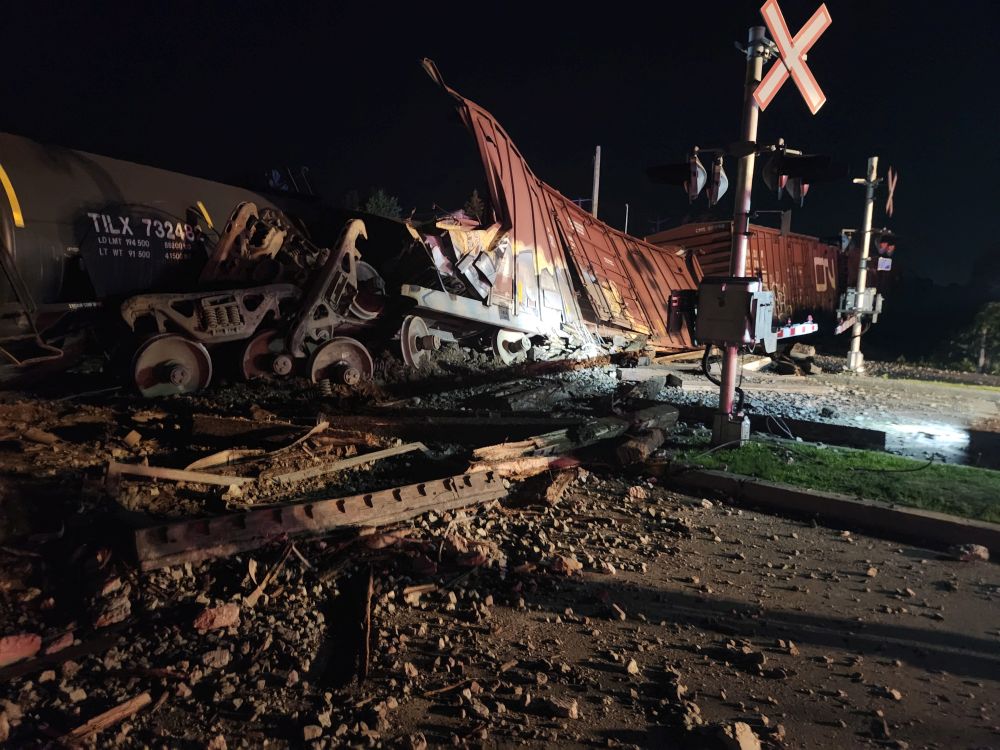
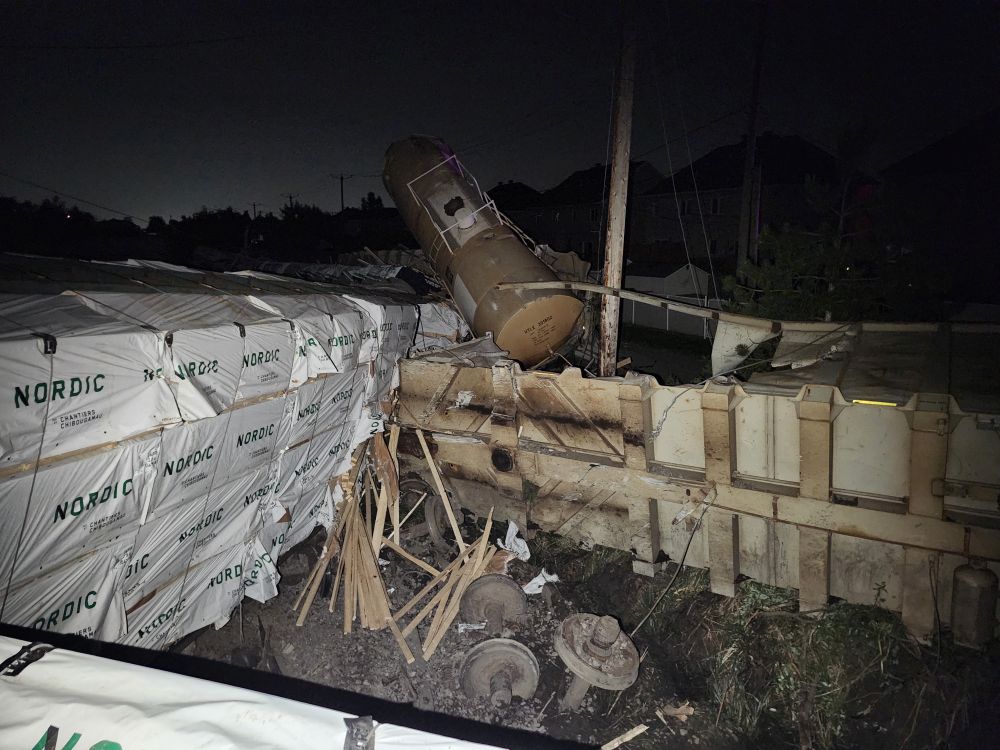
Download high-resolution photos from the TSB Flickr page.
Class of investigation
This is a class 3 investigation. These investigations analyze a small number of safety issues, and may result in recommendations. Class 3 investigations are generally completed within 450 days. For more information, see the Policy on Occurrence Classification.
TSB investigation process
There are 3 phases to a TSB investigation
- Field phase: a team of investigators examines the occurrence site and wreckage, interviews witnesses and collects pertinent information.
- Examination and analysis phase: the TSB reviews pertinent records, tests components of the wreckage in the lab, determines the sequence of events and identifies safety deficiencies. When safety deficiencies are suspected or confirmed, the TSB advises the appropriate authority without waiting until publication of the final report.
- Report phase: a confidential draft report is approved by the Board and sent to persons and corporations who are directly concerned by the report. They then have the opportunity to dispute or correct information they believe to be incorrect. The Board considers all representations before approving the final report, which is subsequently released to the public.
For more information, see our Investigation process page.
The TSB is an independent agency that investigates air, marine, pipeline, and rail transportation occurrences. Its sole aim is the advancement of transportation safety. It is not the function of the Board to assign fault or determine civil or criminal liability.